The Solo Act of Sodium Batteries: CATL Racing Alone
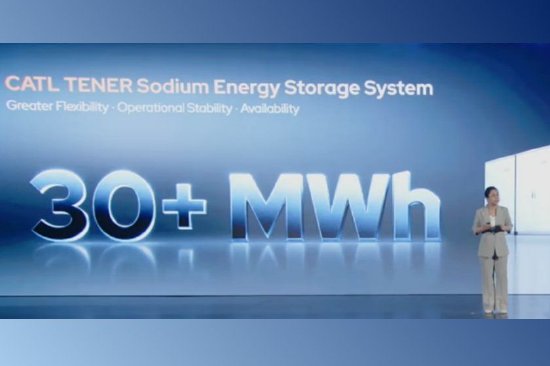
June 22, 2026, Munich. Xu Jinmei, President of CATL Europe, stood on stage unveiling a sodium battery energy storage system named "Tianheng." Below her sat procurement representatives from Europe’s energy sector—unaware that just two months earlier, the company had secured a massive three-year contract for 60GWh of sodium-based energy storage. That figure is nearly seven times the global sodium battery shipment volume projected for 2025.
From April’s “Super Tech Day” to May’s Equipment Power Forum, and then to June’s launch event in Germany, CATL Chief Scientist Wu Kai repeatedly emphasized one message: “Sodium batteries will enter mass production this year.” The phrasing evolved from “Q4” to “this year,” but the core remained unchanged.
Interestingly, on this race track, you hardly hear any other players speak up.
This stands in stark contrast to solid-state batteries, which have become an industry-wide celebration, with every player rushing to announce “breakthroughs.” In contrast, apart from CATL, OEMs and upstream material suppliers seem to have silently agreed upon a shared silence.
The Confidence Behind “Everything”
Sodium batteries are not backup options for lithium batteries. This statement deserves to be repeated three times.
Technically, sodium batteries offer clear advantages: cheaper cathode materials that don’t require imports, high theoretical cycle life, excellent low-temperature performance, strong thermal stability, and no risk of fire or explosion. But their drawbacks are equally evident: low energy density.
CATL cites a value of 175 Wh/kg—close to today’s iron-phosphate lithium batteries at 180–200 Wh/kg. However, the key question remains: Is this single-cell or pack-level energy density? If it's the former, it still falls short.
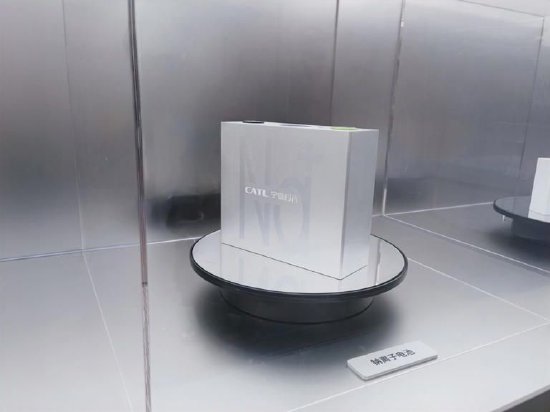
By conventional logic, such energy density suggests that sodium batteries are best suited for commercial vehicles and battery-swapping models. Passenger cars are extremely sensitive to weight and space, making sodium batteries unlikely mainstream choices. Indeed, several battery manufacturers have focused on commercial vehicles—but so far, none has landed formal orders from vehicle makers; all remain stuck in “vehicle demonstration” and “pilot production” phases.
Fudi Battery, under BYD, chose a different path: focusing on energy storage. This makes sense—energy storage prioritizes cost and cycle life, while being much more lenient on size and weight.
Only CATL defies convention. If we apply three criteria—annual capacity exceeding 1 GWh, integration into passenger vehicles, and specific collaborative models—only CATL meets them all.
Why can’t others do it?
There are three main technical routes for sodium batteries: layered oxides, polyanion compounds, and Prussian blue/white.
CATL chose oxides; BYD opted for polyanion. The former offers higher energy density, while the latter achieves up to 10,000 cycles. Thus, CATL dares to push forward in both passenger vehicles and energy storage, whereas BYD focuses first on storage—a fate determined by their respective technology paths.
As for the Prussian blue/white route, despite its cost advantage, it suffers a fatal flaw: during manufacturing, if moisture enters, it produces highly toxic cyanides; thermal runaway may also release cyanide. For this reason alone, it cannot enter the passenger vehicle market.
Some claim that 90% of equipment used in lithium and sodium battery production can be shared. But this is a dangerous oversimplification.
While ball mills, slurry mixers, dryers, and coating machines on battery lines are indeed interchangeable, the idea that “only the slurry differs” severely underestimates the production challenges of sodium batteries.
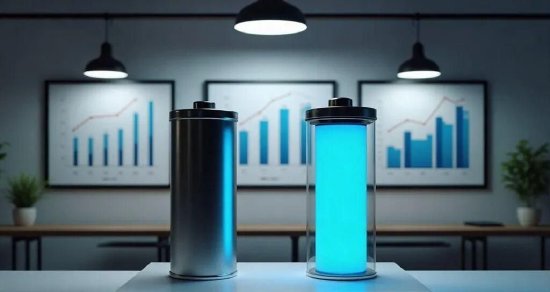
The biggest hurdle lies in the anode. Sodium batteries must use hard carbon—because graphite anodes can hardly intercalate sodium ions. Yet hard carbon generates gas during cycling; without solving this issue, batteries will swell. The good news is that both the anode and cathode of sodium batteries can be bonded using aluminum foil, eliminating the need for copper (unlike lithium batteries, where lithium reacts with aluminum to cause "alloying corrosion"). The bad news is that the adhesion strength between aluminum foil and electrode materials is inherently weak, making the bonding process itself a major challenge.
Another issue all technology paths must confront is environmental humidity control. Sodium battery production demands significantly stricter humidity conditions than lithium battery manufacturing—this isn't something that can be solved simply by retrofitting existing production lines.
Only after overcoming all these hurdles can large-scale production become feasible. This explains why sodium batteries appear competitive on paper, yet few companies have actually invested in them.
The Big Players' Calculations
After 2020, sodium batteries nearly disappeared from industry discussions. The reason was simple: lithium carbonate prices dropped below 50,000 yuan per ton. Market sentiment widely assumed that if lithium was so cheap, who would still consider sodium?
This reflects a classic "stock-trading mindset."
For giants like CATL and BYD, short-term profits are never the core of their decision-making. What truly matters is supply chain stability—specifically, two key factors: raw material availability and the degree of diversification in supply sources.
Over recent years, Chinese battery manufacturers have aggressively acquired mines worldwide. But now, more and more countries are restricting mineral exports or limiting shares of intermediate refined products, aiming to keep high-value processing within their borders. China's dependence on imported lithium carbonate—including lithium concentrate—has already risen to 60%.
The large-scale deployment of sodium batteries sends a clear signal: we're ready to switch to alternatives at any moment. This message is directed at resource-rich nations—don’t assume your leverage will always hold value.
At this scale, companies must remain highly sensitive to geopolitical risks. Sodium batteries represent a strategic hedge.
The Future Puzzle
The entire battery industry knows that, in the long run, solid-state batteries will dominate. However, the transition period won't be short, and even when solid-state batteries capture the high-end segment, metal-ion batteries won't disappear—they'll simply shift into different niches.
Just look at CATL’s product portfolio: the (Qilin) battery targets premium markets with high-end ternary and condensed technologies; the Xiao Yao series serves mid-range hybrid and plug-in vehicles; Shenxing focuses on mass-market affordability. Meanwhile, Tianxing (for commercial vehicles), EVOGO (battery swapping), and Qi Ji (heavy-duty trucks) form a new business division. Now, sodium batteries have joined this puzzle, driven by their cost-effectiveness and low-temperature performance.
In the commercial and passenger vehicle battery market, decisions must be made from the perspective of industry leaders like CATL and BYD. These giants don’t bet on a single technology path. They invest across all commercially promising routes. This dual advantage ensures they neither lose balance to emerging technologies (such as solid-state) nor leave room for smaller competitors to gain differentiation.
To date, CATL remains the only company to successfully commercialize sodium-ion power batteries. Behind this “success” lies a comprehensive system: meeting national safety standards for power batteries, establishing 12–18 month development and calibration agreements with automakers (covering chassis integration, BMS redesign, thermal management reengineering, and crash safety recalculations), securing Ministry of Industry and Information Technology certification, and completing foundational market education.
BYD has already invested billions into sodium batteries and may trail CATL by just one or two quarters in terms of capacity. Yet in the power battery sector, BYD’s strategic commitment appears less firm. At least in the commercial and passenger vehicle space, it remains largely CATL’s solo show.
Sodium batteries may never become the main protagonist. But that doesn’t prevent them from becoming a crucial card—both for product line diversification and supply chain security. Building a robust, comprehensive product portfolio and securing scale advantages across all potential future technologies is precisely what industry leaders prioritize.